If I’m being honest, the part of this reset that’s been testing me the most isn’t awareness, ownership, or even boundaries.
It’s sustainability.
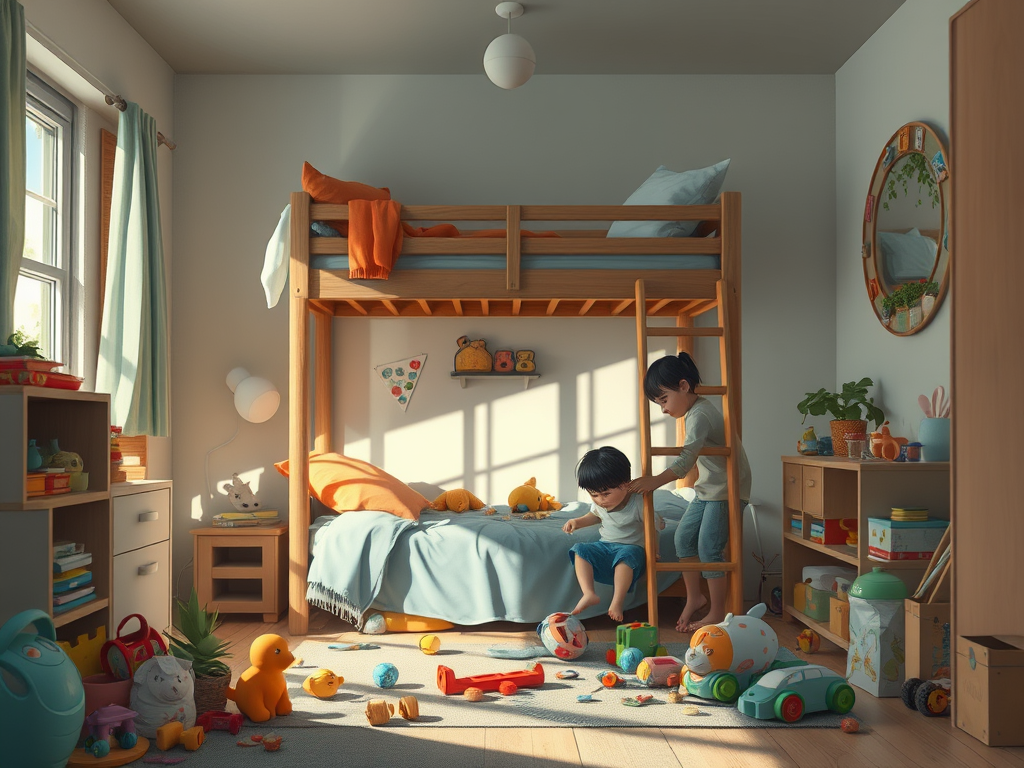
Right now, we’re in the middle of selling our home. That means showings. That means strangers walking through spaces that hold our everyday mess, our real life, our kids’ chaos. And while our common areas are doing pretty well, the kids’ bedrooms? That’s where things keep slipping.
And every time they do, I feel it.
Not just tired—pressured.
Pressured to keep up.
Pressured to stay ahead of it.
Pressured to make sure no one walks through my house and silently judges the kind of mom I am based on the state of my kids’ rooms.
That pressure is exhausting.
The Hidden Problem Wasn’t the Mess
On the surface, it looks like a cleaning issue. Small rooms. Small humans. Should be quick, right?
But the reality is different.
Cleaning bedrooms means crawling under beds I barely fit under. Climbing onto a massive wooden bunk bed to make the top bunk. Lifting, reaching, stretching—what should be a simple task turns into a full-blown workout. And suddenly, all my energy for the day is gone… spent on one thing.
That’s when it hit me:
I wasn’t lacking motivation.
I was mismanaging my energy.
Every day, I was waking up and mentally deciding:
- Where am I putting my energy today?
- What can I push off without wrecking my mental health?
- What has to happen vs. what just feels urgent?
And when I didn’t make those decisions intentionally, I burned myself out fast.
The Shift: Systems Create Visual Expectations
Here’s the truth I had to accept:
I don’t need more motivation.
I need systems—because systems create visual expectations for everyone, including me.
That’s why assigning responsibility for common areas worked. Everyone knows what’s expected. There’s a visual standard. No guessing. No constant mental reminders.
Bedrooms are still a work in progress, but now I understand why: the system isn’t fully built yet—not because I’m failing.
For a long time, I told myself that because I’m the mom, it was my job to carry the weight of the household. Kids needed to be kids. I didn’t want to burden them.
But the longer I sat with that belief, the more I realized something important:
They don’t learn responsibility by watching me drown in it.
They learn it by practicing—imperfectly—while I’m still here to guide them.
Systems That Actually Fit Our Life
We’ve stopped forcing morning clean-ups. No one wants to start their day that way. Mornings used to be chaos—emotional kids, tension everywhere, and coffee that couldn’t save me.
Now, mornings are about getting up, making beds (still a work in progress), and getting out the door. Cleaning happens throughout the day, and the kids take over after school.
Is the house spotless? No.
Is it calmer? Absolutely.
Laundry was another big one.
I used to do laundry every single day just to avoid piles. The sight of clothes stacking up made me feel like I was losing control. So I changed the system instead of fighting myself.
Laundry now happens twice a week. That’s it.
I added a heavy-duty shelving unit for baskets, and suddenly the same amount of clothes felt manageable—because the visual chaos was gone.
Nothing about the laundry itself changed.
The system did.
Emotional Regulation Is a System Too
When I get overstimulated now, I pause. I breathe. I walk away if I need to.
That’s new.
Before, I reacted immediately—no thought, no buffer. Now, stepping away gives me space to come back calmer and more intentional. It protects my kids, and it protects me.
That’s not weakness. That’s structure.
My Bare Minimum Reset
When everything goes off the rails, I don’t scrap the day. I stick to the routine—even if it’s delayed, shifted, or rearranged.
My bare minimum reset is simple:
- counters cleared
- dishes put away
- floors swept
- beds made
When those are done, my nervous system settles. Even if nothing else is perfect, the house feels livable again.
Bare minimum doesn’t mean failure.
It means sustainability.
If You’re Reading This…
If you’re overwhelmed, I want you to change one thing:
the expectations you place on yourself.
This is a lot to carry.
Start researching. Start experimenting. Try systems that fit your family—not someone else’s routine on the internet. Trial and error is part of the process, not proof you’re doing it wrong.
Not every system works for every home. And that’s okay.
This reset isn’t about control.
It’s about support.
And in Part 5, we’re going to talk about what happens when these systems start changing who you are, not just how your house runs.
Leave a Reply